

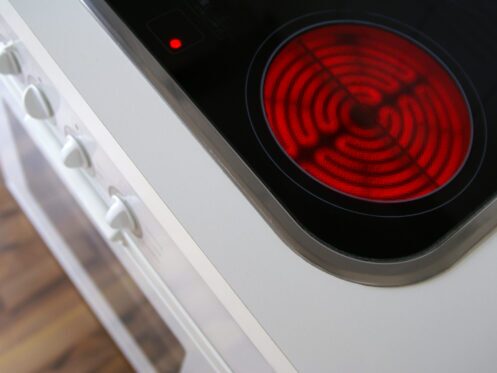
GVEC explains what to consider before converting gas appliances to electric.
- Many electric appliances require a dedicated 240-volt circuit.
- Your electrical panel needs enough capacity for the added load.
- New wiring, receptacles, or breakers may be necessary.
- Operating costs depend on the appliance, efficiency, usage, and utility rates.
- An electrician can identify needed upgrades before you purchase or install the appliance.
Replacing a gas stove, dryer, water heater, or other appliance with an electric model can be a practical upgrade for some homeowners. But before making the switch, it is important to look beyond the appliance itself. Your home’s wiring, circuits, and electrical panel all need to be able to support the added electrical demand.
What Does a Gas Stove to Electric Conversion Require?
A gas stove to electric conversion often involves more than removing one appliance and installing another. Many full-size electric ranges require a dedicated 240-volt circuit. If your home has always had a gas range, the necessary wiring and receptacle may not already be in place.
An electrician can check the existing wiring, available breaker space, and electrical panel capacity before installation. The exact requirements depend on the new appliance, so it is helpful to review its electrical specifications before making a purchase.
What Are the Pros of Switching Gas Appliances to Electric?
One advantage of home electrification is simplifying the types of energy your household uses. Homeowners who are already considering electric vehicles, solar panels, battery storage, or other electric equipment may prefer to move additional appliances to electricity over time.
Electric appliances also offer a wide range of options. For cooking, induction ranges provide another electric alternative and can offer precise temperature control. Electric dryers and water heaters are available in several configurations and efficiency levels.
Planning these upgrades together can also help you prepare your electrical system for future needs instead of treating each new appliance as a separate project.
What Are the Downsides of Converting Gas Appliances to Electric?
The biggest potential drawback is the upfront electrical work. A gas appliance may use relatively little electricity, while the electric replacement could require a new dedicated circuit.
If the appropriate wiring is not already available, an electrician may need to install a new circuit and receptacle. Depending on the home’s existing electrical demand, additional work could also be necessary.
Operating costs are another factor. Gas and electricity rates vary, and the efficiency of individual appliances differs. Instead of assuming one option will always cost less, compare the appliance specifications, expected usage, and local energy costs.
Remember that the gas side of the conversion may require another qualified professional. An electrician handles the electrical work, but existing gas connections must also be properly addressed.
Will You Need an Electrical Panel Upgrade?
Not every gas-to-electric appliance conversion requires a panel upgrade. It depends on your existing panel capacity, current electrical load, available breaker space, and the requirements of the appliance.
The question becomes more important when several appliances are being converted. An electric range, dryer, water heater, HVAC equipment, and EV charger can all add to the home’s overall electrical demand.
If additional capacity or electrical work is needed, GVEC’s electrician services can help homeowners evaluate whether their existing electrical system is ready for new appliances and added circuits.
Should You Electrify Every Gas Appliance at Once?
No. For many homeowners, converting appliances gradually makes more sense. You might replace a gas stove when it reaches the end of its life, then consider the dryer or water heater later.
The important part is letting your electrician know about future plans. If you expect to add several electric appliances, an electrician can consider those future loads when evaluating the system today.
That approach can help you avoid making an electrical change for one appliance only to discover that another upgrade is needed soon afterward.
What Should an Electrician Check Before You Make the Switch?
Before converting a major gas appliance to electric, an electrician may evaluate:
- The appliance’s voltage and circuit requirements
- Available space in the electrical panel
- The home’s overall electrical load
- Existing wiring and circuit sizes
- Whether a dedicated 240-volt circuit is needed
- Other electrical upgrades you may be planning
If you are unsure about the condition or capacity of your system, GVEC’s residential electrical services can help identify potential wiring, circuit, or panel concerns before installation begins.
Is Switching Gas Appliances to Electric Worth It?
It can be, but the answer depends on your home and your goals. If the necessary wiring and panel capacity already exist, converting a gas appliance may be relatively straightforward. If new circuits or other electrical upgrades are required, the upfront investment will be higher.
Getting an electrical evaluation before purchasing a major appliance gives you a clearer picture of the full project and helps prevent surprises during installation.
Plan Your Gas-to-Electric Conversion With GVEC Electrician Services
Switching from gas appliances to electric ones is not only an appliance decision. It is also an electrical planning decision.
GVEC Electrician Services helps South Central Texas homeowners evaluate circuits, wiring, electrical panels, and other upgrades needed for modern appliances. If you are considering a gas stove-to-electric conversion or a broader home electrification project, contact GVEC Electrician Services to make sure your home’s electrical system is ready.


